Showing posts with label food buying. Show all posts

Jan 25, 2018

Is Expensive Chicken Worth It? Comparison of Industrial & Pastured Chicken

In early January, I taught a 5 day high school class for 3 hours a day with my good friend and fellow foodie, Diane Loftness. The course title was "Science and Health of World Cuisines." Our class was based primarily on the findings of dentist Weston A. Price. He traveled the world in the 1930's asking the question, "What does diet and overall health have in common?" As a dentist, he took pictures of people's teeth and facial structures. He found remote peoples in the four corners of the earth with beautiful straight teeth, free from decay. His work is absolutely fascinating. You can find his book, complete with interesting pictures, as a free pdf here. Dr. Price found that as modern foods were introduced to traditional societies, health began to decline. If nothing else, go scroll through some of the pictures.


The class we taught was simultaneously exhilarating and exhausting. Every day Diane and I would empty our kitchens, fill our cars, carry everything to the classroom then teach in a science lab. The kids were eager to learn. We made 4 varieties of sauerkraut, butter, ice cream, whipped cream, smoothies with homemade kefir, ate bone marrow and chia pudding, compared multiple brands of eggs and varieties of yogurt, talked about labels and packaging, and compared nutrient density of organic and conventional produce with a Brix meter.

My favorite activity? Cooking and comparing two whole chickens.

Reason for the Experiment
For at least ten years, I’ve been on an intentional journey to learn more about what goes into my body. It has been eye opening on so many levels.

Early into the journey, I remember cooking two whole chickens simultaneously in separate crock pots. One was for us, the other for a friend. I love sharing good food with others and often take meals to families with a new baby or in distress (or both!) However, because local pastured meat is so much more expensive I decided to save money and buy a grocery store chicken for my friends. It's still a home cooked meal and more nutritious than what they would otherwise eat.

The first chicken to be deboned was the smaller, leaner, pastured chicken from a local farm. BUT then, when taking the meat (and globs of fat!) off the bird from the grocery store... I was totally grossed out.

That day an idea spawned for this experiment. I wondered, “Is it really cheaper to buy the grocery store bird when so much fat is being thrown away?” About the Experiment In class, we compared two chickens: a chicken from Kroger and a local bird. They were cooked separately low and slow, crock pot style for about 10 hours, each in 1500mL of water.

Each bird was weighed in the packaging and again after it was opened and extra liquid drained off. (The Kroger bird lost 8% of its weight before we even started cooking!)

My undergraduate degree is in engineering - I took a fair share of science labs. I’m under no illusion that this experiment is flawless. Rather, please read these results with a grain of salt, knowing more than a few mistakes and discrepancies were made. I have a more extensive spreadsheet if anyone is curious for more details, just contact me.


industrial from Kroger
     pastured, local
cost:
$7.20
$17.24
price per pound
$1.49
$4.34
volume of liquid lost (% purchase weight)
8%
4%
volume of broth (%weight before cooking):
31%
18.3%
% usable meat
43.2%
60.5%

Big Picture Takeaways

Industrial chicken - 8% (or $0.58) was poured down the drain as soon as the package was opened. More broth (which is mostly water) was produced from this chicken than the others. Broth accounted for 31% of its pre-cooked weight - almost double that of the pastured bird. We cut off almost a quarter pound of pure fat before cooking.

Pastured - most expensive and also greatest percentage of usable meat; the bones and fat were separated from meat. The color of the meat was vibrant and the fat was not excessive. This bird was not given antibiotics or fed genetically modified grain (GMOs).

Further Explanation The first chicken we shall discuss in depth is the one industrially raised. Purchased from Kroger under the label of Sanderson Farms, it was $1.49/lb. The package said, “Contains up to 3% retained water.” This bird from Sanderson Farm was decidedly a better option than the cheaper one for $0.99/lb, because that one contained up to 15% chicken broth, carrageenan (which is a name for MSG) and salt. Be sure to read the labels. I was utterly SHOCKED that this bird produced 31% its weight in broth. Some broth is to be expected. But woah Nellie. That’s a lot of water retention.

A local farmer explained to me that industrial chickens are expected to freeze and thaw at least 7 times before they get to your home. As such, the factory packaging process allows the chickens to sit in a “solution” while waiting to be packaged. This marinating time allows absorption of the solution, which helps the texture of meat that has been frozen and thawed multiple times. This also explains the large discrepancy between the volume of broth in the chickens.

Please know that the Kroger bird is still good. I eat chicken from Kroger. It is still food. It is better than fast food. It is better than no food.

The point I’m trying to make is that when you buy an industrial chicken, you are paying for a lot of water...and definitely chemicals.

Did you know that industrially raised animals (beef, pork, chicken) are all given routine antibiotics whether they are needed or not? They are given antibiotics to help them gain weight. (I’m not making this up -- Google and read for yourself.)

Did you know when you eat meat that has been given antibiotics that it not only causes you to more readily gain weight but also you are more resistant to antibiotics when they are needed? Read this interesting article from The Atlantic.

Learning this information about antibiotics is one reason that helped me to rationalize paying more for healthier meat. But I digress...

The second chicken I failed to photograph. Indeed, I failed to take very many pictures during class. I felt like the chicken with its head cut off trying to direct 11 high schoolers in a science lab pretending to be chefs.

The second chicken we cooked in class was purchased locally from GrassRoots Co-op. Pastured chickens are raised outside (fresh air and sunshine) and are moved to new grass (and bugs) twice a day. GrassRoots air-chills their meat -- as compared to a water bath of chemicals where the Kroger bird soaked up so much solution.  GrassRoots freezes their meat immediately after processing, which significantly reduces the risk of food born illness and bacteria.

As for treatment of their animals while alive, GrassRoots has a non-GMO and no antibiotics policy. In fact, they have crazy high standards for their animals. If there’s one thing that is a priority when choosing food for my family, it is avoiding GMOs at all costs (most prevalent GMOs are corn, soy & sugar beets aka white sugar). Here’s a short article on why it is concerning to eat GMOs.

This might sound like a commercial for GrassRoots Farmers’ Coop, who ships directly to your door - to all 48 continental states.  They didn't pay me to write about their meat.  In fact, I paid for the chicken because my usual meat farmer was out of chicken.  If you’re in central Arkansas, Katie of FarmGirl Meats has a delicious meat share program and delivers to Little Rock twice a month. Katie does things right and I whole-heartedly, unashamedly want to promote her too.

Twenty years ago, in college, I worked in an industrial chicken house. The professor I worked with was trying to figure out how to reduce the ammonia in chicken waste by changing the feeding composition and rations.

He also worked with fans in the chicken house, trying to increase fresh air for the birds. When there’s too much ammonia, it causes blindness. Blind birds don’t eat. Dead birds don’t make money.

Here’s a secret: if animals are outside and there’s plenty of grass, giant fans aren’t needed to keep the air clean. When comparing the two chickens before cooking in class, there were obvious visible differences (kicking myself again for not taking pictures).

Imagine this: one bird has a rich reddish brown color and tight skin. The other bird is undeniably white with thick pockets of extra fat, especially near the cavity opening.

The color difference was quite pronounced after cooking, too. The top plate of chicken is the pastured bird, who had variation in its diet. The bottom plate is from a bird that never saw the light of day or even a single bug in its lifetime. Its diet consisted of a lot of government subsidized GMO corn and soy (helping to keep prices low). If color is an indicator of nutrient density (think: white bread vs wheat bread), which plate of chicken do you think is the healthiest?

The price of the pastured chicken was more than twice that of the one from the grocery store.  When I buy a whole chicken, whether it was an expensive one or not, I save the bones to make nourishing broth.  Similar quality broth can be purchased for about $8/quart.  So, if you factor the meat and the broth, the pastured bird isn't that expensive.

Broth can be made from any kind of bones; making broth from an expensive chicken helps justify the cost.

But wait! There’s more! Can you hang with me a bit longer?

I wanted to extend this experiment beyond the classroom. A few weeks after this experiment, I bought a third chicken from Natural Grocers - a natural grocery store near me that prides itself on high quality standards. It is similar to Whole Foods in that the meat sold cannot be given antibiotics.

The third whole chicken I bought was labeled organic (never given antibiotics or genetically modified grains) and air-chilled. It was industrially raised like the one from Kroger (never seeing daylight or having fresh air) also never frozen, thus the label air-chilled. Liquid lost from packaging is the least of the three birds - only 2% or $0.29. It had the lowest volume of broth, probably because it had never been frozen.

You will note in the comparison chart below that the percentage of usable meat is the lowest of the three birds because it was boiled instead of cooking it low and slow like the other two. Removing all the meat from the bones proved difficult. In class we slow cooked two chickens (the good and the best). The third chicken (the better one) was quickly boiled in my kitchen for dinner one night.

Side note: One of the things we talked about in class is the time/money continuum. On the day I boiled the bird for dinner, I didn’t have much time, so I wasted money. There are plenty of ways to save money in the kitchen eating real food if you have the time (like using a whole chicken with bones for $4/lb instead of boneless-skinless at $6-9/lb).

Time was of the essence to get dinner on the table so I boiled the bird in about 30 minutes. The reason this is important to note is because when cooking low and slow, the meat simply falls off the bones. Nothing is wasted. As you can see in the % usable meat, the “better” bird had less usable meat. Much of it clung to the bones because I cooked it too fast.
GOOD
BETTER
BEST
industrial from Kroger
air-chilled Nat. Grocers
pastured, local
cost:
$7.20
$14.70
$17.24
price per pound
$1.49
$3.55
$4.34
volume of liquid lost (% purchase weight)
8%
2%
4%
volume of broth (%weight before cooking):
31%
16.9%
18.3%
% usable meat
43.2%
*38.7%
60.5%
*better chicken was boiled instead of cooked low and slow, like the other two chickens. The quick cook time caused the meat to adhere more to the bones making it more difficult to remove.

So which chicken do I recommend you buy? I can’t answer that for you. You have to wade through your priorities.
  • is nutrient density a priority for your family?
  • are you gaining weight from antibiotics in your meat? concerned about antibiotic resistance?
  • what have you read about the health dangers of GMOs?
  • does it matter to you to know your farmer? source of food?
  • are you concerned about the environment? (Industrial farms are terrible for the environment.)
Many people balk at the idea of paying $17 for a whole chicken. I get it. However, one thing I’ve been convinced of in my 10 year food journey: good food isn’t cheap.

How we spend money speaks to priorities. Some people tell me they “can’t afford to eat healthy/organic/etc.” These same people spend a lot on entertainment: Netflix, cable, cell phones, cinema, concerts. Truth be known, our grandparents spent more of their salary on food than we do.

My husband and I have chosen inexpensive cell phone plans, we don’t have TV/cable, or Netflix, and we don’t spend anything on pharmaceuticals. It is our belief that nourishing our bodies now with clean living, eating healthy, whole foods will result in fewer pharmaceuticals and trip$ to the doctor later. Please don’t hear this as judgement if you choose otherwise. One of the beautiful things about being an American is the freedom to choose how to live. Honestly, I do not think less of a person if they eat junk.  It's your body. (I eat my fair share of junk, too!)

If reading this article is the first you’ve thought about food sourcing, and you like to watch documentaries, may I recommend two?

The first I tell people to watch is called Food, Inc. It exposes many of the problems in our industrial food system. There is a solution to this problem that can be solved by you and me. Food activist Michael Pollan says, “We vote three times a day with our fork.” Fresh the Movie gives practical ideas of how we can change our food system. Both movies were required viewing for the students in the class.

Above all, I hope this chicken experiment has caused you to stop and think about food. Think about where it comes from and what happens to it before it lands on your table. The longer I’m on a food journey, the more I read and learn, the more I am convinced that I am not wasting money on good food. After all, you are what you eat.

Julie
+++++++++
If you're reading this blog post in an email, I probably won't blog here much more.  My husband and I started a blog together.  When I can find the time to write, it will be on that blog. We won't write more than twice a week.  Interested?  Click here, scroll to the bottom and sign up for emails there.

share facebook tweet

Sep 11, 2016

Grass Roots Co-Op (Healthy Meat Shipped to Your Door)

Full disclosure -- Grass Roots Farmers' Cooperative gave me samples of some of their products and asked that I write about them if I liked them.  Truth be told, I would have written this same post without the yummy meat.  I've participated in FarmShares for several years and wholeheartedly recommend them.  I love the quality of food and supporting the small farmer.

Grass Roots Co-op has a special-deal-membership drive going on now until the end of September.  In addition, members get an additional 20% off a la carte items.

Grass Roots ships everywhere in Arkansas and other states as well.  Tell your good food lovin' people in Alabama, Florida, Georgia, Illinois, Indiana, Iowa, Kansas, Kentucky, Louisiana, Michigan, Missouri, Mississippi, Ohio, Oklahoma, North & South Carolina, Tennessee, Texas and Wisconsin.

Let me tell you about the meat they gave me then I'll tell you more about the Co-op.

Ground Beef - Sometimes grass-finished beef can taste "gamey" or like wild game because it doesn't have enough fat to bring the flava. The ground beef was VERY good. I took this to a dinner party in the form of HBs cheese dip and everyone raved.

Deli Ham - Wow.  It is good.  And no nasty preservatives.

Brats - Amazing, especially the lime-mesquite flavored ones.

Ground Turkey - is on the menu this week in the form of lettuce wraps.

From this sampling, I wholeheartedly give my approval of Grass Roots Co-op.

What are the benefits of a co-op?

Farming is hard work.  Non-stop, jack-of-all-trades kind of work.  When farmers band together to form a co-op, they can focus more on growing healthy meat while someone else tends to administrative and marketing details.

For the consumer, when buying from a co-op, we get a stable meat source.  Usually all cuts are available year 'round since there are multiple farmers to fill in the gaps in the event of a problem that would inhibit the farmer from delivering, like predators or herd illness.  And the marketing and accounting are very pretty.  (I've worked with a few farmers over the years who very much stink in the area of accounting and sadly, some are no longer farming.)

In the previous post, I recommended that if you were buying direct from a farmer you should ask questions about their practices.  When I tell some people this advice they totally freeze.  The thought of talking to a stranger at the farmers' market about a subject that is less than familiar totally wigs them out.  When you buy from Grass Roots, they have done your homework!  They have vetted the farmers for you.  Before the formation of Grass Roots, I purchased from at least two of the farmers.  Read here about the husbandry standards of the farmers in the co-op.  Most notably, I'm quite impressed that Grass Roots prohibits GMOs.

The downside of working with a co-op is that you don't always know which farm(er) your meat is coming from.  However, as stated above, the co-op makes sure the farmers are practicing with high standards so the consumer can can feel good about every piece of meat.

One thing I love about Grass Roots is how easy it is to get meat from them.  They ship their products directly to your door.  Shipping is free when you become a member or when you purchase at least $75.  It arrives frozen in a cooler on dry ice, delivered by FedEx, and you don't have to stop what you're doing - or remember - to drive across town to meet someone for your meat.  Because it is frozen you don't have to eat it right away.

What does membership include?

The Whole Farm Membership Monthly Box includes: a whole pasture-raised chicken, 2lbs grass-fed ground beef, a package of brats, & 2 lbs of forest-raised mild ground sausage.

The Chicken and Pork Box includes: a whole pasture-raised chicken, 2 lbs of forest-raised ground sausage & 2 linked sausages.

The Chicken and Beef Box includes: a whole pasture-raised chicken, 4lbs grass-fed ground beef

The Chicken Box includes: a whole pasture-raised chicken, a package of breasts (2pieces), a package of 4-6 drumsticks, a package of 5-6 wings and a package of 4-5 thighs.

If the box isn't enough for your family for the month, or if you have a special event, you can always add pieces a la cart with 20% off the retail prices.

Mouth watering yet?

Go here and sign up.

Julie

Related: The Healthiest Meat
Why is the Farmers' Market More Expensive?
Why Pay More for Grass-Fed Meat?

share facebook tweet

Sep 9, 2016

The Healthiest Meat

When it comes to buying meat for your family, there are several options.  Not all meat is created equal.  Once I saw The Dollar Tree boast of a $1 steak.  Ewwww.

People sometimes ask me, "Where should I start on my real food journey?"  Buying healthier meat can be an easy transition to a healthier lifestyle.  Most of your family members won't even know (unless they're used to eating lots of processed meat like hotdogs and bologna).  However, locally grown meat comes at a price just a bit more than $1 steak.  Yesterday Tara explained that you can't really compare the nutrition of grocery store food and that from small farms who are intentional.  Katie has shared before some tips for eating less meat which helps us stay within the budget.

So what's the healthiest meat?

The absolute healthiest meat would be that you have raised yourself on plenty of pasture and know everything about the animal.  Granted 99.9% of us aren't farmers so we look for other sources.

Next healthiest option is to buy directly from a farmer.  Get to know your farmers and ask them questions about their treatment of animals.  Not all farmers are as intentional as our dreams so be sure to ask questions like: What do the animals eat?  (The answer should be mostly grass.)  How much time do they spend on grass?  How large is the farm? How much grain are they given? GMOs?  What about the water source?  Are animals rotated to new pastures?  How many animals does the farmer process annually?
photos used by permission from Bryan Clifton & Grass Roots Co-Op
You can do your own research on why grass-based meat is healthier.  Please don't blindly take my word for it.  If we were to talk across the dinner table, these are some of my reasons for spending more to make grass-based meat a priority in our grocery budget:

Animals raised primarily on grass are healthier to eat because when given too many grains, it changes the omega 3 and omega 6 ratios in the fat.  Translated to humans, too much omega 6 causes inflammation -- which is the root of all disease.

Grass finished animals have more conjugated linoleic  acid (CLA) which is a polyunsaturated fatty acid that some believe fights cancer.  You'll also find high amounts of CLA in grass based milk products as evidenced by very yellow butter.

photos used by permission from Bryan Clifton & Grass Roots Co-Op
Cows that are finished in a feed lot (most grocery store beef) would die within 6 months because they are given exclusively grain.   My dad raised cattle; on pasture cows can live for YEARS if given proper living conditions.  Feed lot animals are finished in deplorable and cramped living conditions.    If you've ever driven past one of these sad feed lots (eastern Colorado, as well as in Texas and Kansas), you will want to plug your nose...for miles. Cows are meant to have plenty of room to roam, eat grass, and not exclusively grain fed.
photos used by permission from Bryan Clifton & Grass Roots Co-Op
Chickens that have access to grass will also be healthier.  The ones that lay eggs will have deeply golden yolks - orange if they're on fast growing green grass.  Chickens are actually omnivores and enjoy eating a variety of high protein bugs and other critters.  Most chicken you buy in the grocery store has never seen the natural light of day and has been given routine antibiotics, whether they need it or not. This translates to antibiotics in your body and can create an antibiotic immunity in humans.  Conventionally raised birds are fed exclusively a "vegetarian diet" aka grain.
photos used by permission from Bryan Clifton & Grass Roots Co-Op
Pigs - oh my pigs.  Admittedly, I'm a food snob.  If you invite me to your house and serve pork from Wal-Mart I will be polite and eat it.  As for feeding my family, I try very hard to only serve them pork from farmers I know and trust.  Pigs that have had exposure to sunlight will have high amounts of vitamin D which helps my body in so many ways.   I know too much about the nastiness of pigs, the conventional growing methods (LOTS of antibiotics) to consistently feed grocery store pork to my family.  If I can't afford pork from a local farmer, we just don't eat it.

Local meat farmers that I've trusted to feed my family include:

 - FarmGirl (whose meat share opens September 15),
 - Way to Grow (budding new family farm, processing chickens this weekend and next)
 - as well as other small farmers that have recently joined a co-op.

My third choice when choosing meat would be from a co-op like Grass Roots Farmers CoOperative.  Monday, I will write more about Grass Roots but I want to encourage you to check out their site now.  They have a special deal until the end of September and they deliver straight to your door, no shipping costs.

Forth choice would be to find a hunter or angler to share their wild bounty with you! Maybe I should move this choice closer to the top of the list.  My parents, whose garden is regularly destroyed by deer, would probably put venison at the top of this list.

Fifth choice would be grocery store meat.  Some grocery stores will carry meat that has been marked "no-antibiotics." Natural Grocers and Whole Foods are safer places to buy meat.  You cannot buy meat from either store that has been fed antibiotics.  Kroger's Simple Truth brand doesn't always have antibiotics (but please always look closely at the packaging...not all Simple Truth is antibiotic-free.)  The down-side of grocery store meat is that you know nothing about the farmer's standards or the animals living conditions.

As far as I know, it is a federal law that animals raised for meat cannot be given growth hormones.  Some dairy cows are given growth hormones to promote lactation.  Unless your dairy is organic or labeled rBST-free, there is a good chance that it is tainted with growth hormones.

When it comes to food, we have many choices.  Educate yourself.  We vote 3 times a day with our fork.

Yours for nutritionally dense food on the table,
Julie

Related: Why pay more for grass based meat?


share facebook tweet

Feb 25, 2016

Foodshed Farms Cooperative CSA

Friday, February 26 is CSA Sign-up Day, a day picked out by Small Farm Central to celebrate and encourage Community Supported Agriculture (CSA).  My family has participated in a CSA for several years now and I love it.  Admittedly there is a learning curve to eating in season and thinking through the lens of "use what I have."  There are many benefits of participating in a CSA.  Best of all, it encourages me to get more vegetables on the table.  Hands down, local veggies taste better.

If this is your first time with a CSA, ask a friend or neighbor to join you.  This way you can take turns picking up the food AND practice using half your share.  Some people feel overwhelmed with all the vegetables they receive.  Please note that this CSA is for Little Rock, Conway, Bryant and Ft. Smith!

--Julie
++++++++++++++++++++++++++++

Foodshed Farms Cooperative CSA 
     --guest post by Liz Wenzel

Foodshed Farms is a farmer-owned cooperative that supports the livelihoods of small-scale Arkansas farmers while increasing access to fresh, local produce. We care about our state and the people in it, so we joined together to grow food that cultivates jobs, community, and wellbeing.

The primary way we do this is through a multi-farm CSA (community-supported agriculture) program, in which shareholders sign up and pay in advance to receive a weekly share of fresh produce throughout the growing season. The CSA model secures a market for our farmers all season long and reduces some of the risk associated with small-scale farming.

Working together as a cooperative has additional benefits for our farmers, allowing them to consolidate marketing, distribution, and technical training so they can turn their energy to growing food that is good for both consumers and the environment.

All of our farmers are Certified Organic or Certified Naturally Grown, demonstrating their deep commitment to sustainability and long-term health.

Sourcing produce from different regions of Arkansas also helps our shareholders by ensuring a dependable product with lots of variety. We embrace the opportunity to provide our shareholders with the best flavors of Arkansas, from new and exotic vegetables, like kohlrabi and fresh ginger, to tried-and-true favorites such as tomatoes, squash, and kale.


Additionally, as a farmer-owned business, we put our farmers first and support their livelihoods in ways that traditional agriculture typically doesn’t. While USDA research shows that farmers nationwide receive an average of only 15 cents for every food dollar spent, we’re able to give 80 cents of every dollar right back to our farmers.

Through the Foodshed Farms Cooperative CSA we hope to expand the local food market in Arkansas and keep our food dollars in Arkansas’ economy, bettering the lives of small-scale farmers and consumers alike.

2016 Season Details
Full Season Share
16 weeks (May-August)
$440 ($27.50 per week) + tax

Half Season Share
8 weeks (May-June or July-August)
$240 ($30 per week) + tax

Each share contains 6-10 pounds of fresh, seasonal produce with an average of 7-9 items. We recommend one share to supplement the diets of 2-3 vegetable eaters or for an individual who wants to share with friends and family.

Share contents depend on what’s in season and harvested each week, but we will provide a tentative list the week of each pick-up. In addition, you’ll receive a weekly newsletter with recipes, storage tips, and information about the farms your produce is coming from.

Meat Share Add-Ons
Shareholders also have the option to add on a share of pasture-raised, non-GMO meat from Grass Roots Farmers’ Cooperative. Meat shares will be delivered once a month to your regular CSA pick-up location. Choose between the Whole Farm Share (pasture-raised chicken, grass-fed beef, and forested pork) for $100 or the Cackle Pack (pasture-raised chicken) for $90.

Pick-Up Locations
Deliveries begin May 4-6 and go through August 17-19.

Little Rock
Arkansas Children’s Hospital* (Thursday 4-6 p.m.)
Baptist Health* (Thursday 4-6 p.m.)
Baptist Health* NLR Campus (Friday 4-6 p.m.)
Heifer International* (Thursday 4-6 p.m.)
Unitarian Universalist Church (Friday 4-6 p.m.)

Conway – The Locals Food Hub (Wednesday 4-6 p.m.)

Bryant – Natural Things Food Store (Wednesday 4-6 p.m.)

Fort Smith
Mercy Hospital* (Wednesday 11 a.m.-1 p.m.)
ArcBest Corporation (ArcBest employees only)

Payment Methods
E-check (upfront or in installments)
Credit/Debit card (upfront or in installments)
Check
*Payroll deduction for eligible employees at Arkansas Children’s Hospital, Baptist Health, Heifer International, and Mercy Hospital (Fort Smith)

Sign up for a Foodshed Farms CSA share at www.foodshedfarms.com


share facebook tweet

Jan 6, 2016

New Health Food Store in Little Rock

 
I'm so excited!  Little Rock is getting another health food store.  For those of us who live in mid-town and drive past a new construction on Rodney Parham near Reservoir, we've been anxiously waiting to learn what will be there.  The actual address is 9210 Rodney Parham.

The doors open Tuesday, January 19 at 8 am.  The first 60 customers will receive a gift card worth up to $100.  Gift cards will be in the amount of $5, $10, $25, $50 and $100. Customers won’t know the amount of their gift card until they check out. The store will also offer a tasting of healthy and delicious food from its Paleo Wraps class.

Did you read that?  The store is giving away money AND offering classes?!  The classes aren't just for the grand opening, either.  They have a teaching kitchen in the store in order to provide on-going education for the customers.  *awesome*

The first four Saturdays the store is open, they will have demonstrations and tastings.  All activities will take place from noon to 4 p.m. on the following dates:

Saturday, Jan. 23: Taste the Difference Food Standards Make
Saturday, Jan. 30: Gluten-Free Tasting Expo and Health Fair
Saturday, Feb. 6: Paleo Fair
Saturday, Feb. 13: Sweet Sensations Health Fair

Natural Grocers will provide the Little Rock community with fresh produce that is exclusively USDA Certified Organic, as well as other healthy, affordable, organic and natural products. The store will feature a mix of national brands and locally-grown, raised and manufactured products from Arkansas in a small, neighborhood market environment. The Little Rock store will also feature a Nutritional Health Coach and offer free nutrition education classes to the public. Here's a 90 second video for a tour of a Natural Grocers store.

-Julie


share facebook tweet

Dec 1, 2015

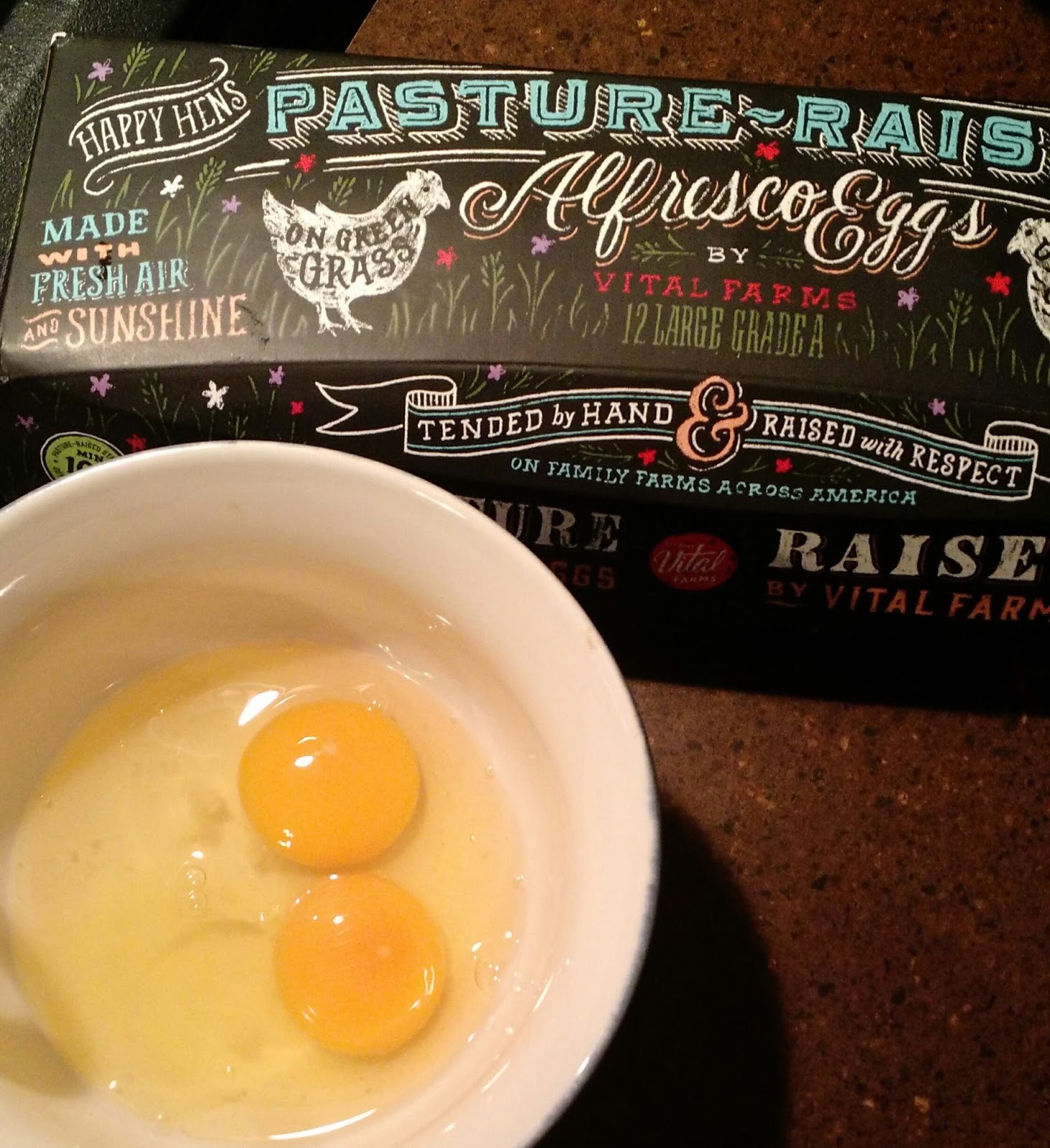
Pasture Raised Eggs (at Kroger)

Buying local pastured eggs is one of my food priorities.  Sometimes however, I can't always find local eggs... or, enough to fill my family's demands.  I have an egg share with Farm Girl but lately my people have been eating a lot.  Unfortunately I think this is a trend that will only continue.  My 11 year old son grew three inches last year.

After talking with a knowledgeable friend, I decided to try the above pictured "Pastured Raised" brand eggs that my Kroger carries.   This morning I was delightfully surprised at the color of the yolk.  The bright orange hue is telling of the chicken's living conditions.  These ladies ate a bit of green grass in their lifetime.  

The dark color in the yolk is evidence of nutritional density.  If you are looking to sneak some nutrition into your family, buy the best quality of eggs you can afford.  Quality eggs taste better, too.

Buy local when possible.  When in a pinch, I will now recommend and buy Pasture Raised brand from box stores.  

--Julie

Related:: Why you should pay more for eggs and the difference in wording on the cartons.

share facebook tweet

Jan 15, 2015

Arkansas Abundance Spring CSA

I love knowing where my food comes from - and that it is nutrient dense. When you buy locally, the food is fresher (hasn't been on a truck or boat for days from California or Mexico...or China.)  And, when you buy from growers who are concerned about investing in their land with biodynamic amendments, you are sure to get nutrient dense nourishment.  The longer my nose is in the food scene, the more convinced I am of the need to vote with my fork and buy local.

It is my desire to make you aware of local, real food options.  Central Arkansas has an abundance of choices.  We are blessed!

Earlier in the week, we heard from Rattle's Garden and about their FarmShare.   In December, I mentioned North Pulaski Farms' CSA for summer 2015.  Today Arkansas Abundance is in the highlight.

Each farm has a different personality.  And options: pick up locations, variety of produce, length of season, etc.  Read through each and try to get to know your farmers.  Or, be brave and just jump right in!

There is a learning curve for using the veggies you get weekly in a CSA.  It's not bad, just different from grocery store buying.  Actually, I have enjoyed the challenge of using up what I get each week.  One of the things I appreciate about the Arkansas Abundance CSA is that you can start small.  Baby steps.
 -Julie

PS - I'm happy to highlight other farms, just send me the info.

+++++++++++++++++
Arkansas Abundance - Daniel Kiser
A local, chemical-free farm
Spring CSA 2015

How much you want,
what you want,
when you want it.

A CSA (short for Community Supported Agriculture) is a program in which a customer buys a share of a farm at the beginning of the season.  In this kind of program, the farmer benefits by sharing the risks of the growing season with his customers, while the customers benefit by receiving a convenient delivery of  produce each week.  At Arkansas Abundance, we're seeking to create a CSA that gives our shareholders both convenience and choice.  We're also committed to giving our shareholders the very best of our crop, giving them their choice of the produce before farmer's markets.

How it Will Work
Unlike many CSA programs, in which the contents of each weekly share are determined by the farmer, our program allows shareholders to choose what they want and how much they get each week.  A few days before harvest, we will share a Google Doc that lists the produce we have available.  Our shareholders will then mark on the Google Doc the produce that they would like for that week.  After it is harvested, they can pick up their produce at one of four locations on three different days, listed below.

Pick Up Locations
Hillcrest Farmer's Market
Saturday 8am-Noon
2200 Kavanaugh Blvd

Westover Hills Farmer's Market*
Tuesday 4pm-7pm
6400 Kavanaugh Blvd

Julie Majors' House
Tuesday 4pm-6pm
1600 Tarrytown Rd

West Markham Farmer's Market*
Thursday 4pm-7pm
9820 W Markham St.

*Pickup will be at the farm until these markets open in May.

The CSA will run from Apr. 19-Jun. 13. Expected produce includes organically grown lettuce, spinach, arugula, kale, swiss chard, cilantro, carrots, turnips, radishes, beets, broccoli, cauliflower, and strawberries!

Share Options

Small (1-2 people) 
$100 of produce over 8 weeks. $0-$20 value and up to 1 of each item each week.
Medium (3-4 people)
$200 of produce over 8 weeks. $0-$40 value and up to 2 of each item each week.
Large (5 or more)
$300 of produce over 8 weeks. $0-$60 value and up to 3 of each item each week.

Each week, shareholders will be able to choose the produce they want up to a certain value that depends on share size.  They can choose to get more produce on some weeks and less (or none) on others.  The amount of each kind of produce they receive will also be dependent on share size.  For example, a small shareholder will be limited to one bunch of carrots per week, while a large shareholder can choose up to three bunches of carrots per week.  These limitations help ensure that the farm is able to provide everyone with the kinds of vegetables they want.

However, there may be occasions when there won't be enough of a particular item for everyone.  This is most likely to happen near the beginning and end of the season, when crops are still growing or when they're winding down.  It may also happen in the middle of the season if there is a partial crop failure.  In these circumstances (and we will do everything we can to prevent them!), those who paid for their share earlier will receive first pick.

How to Sign Up

Email us with the information listed below.

-Name
-Phone number
-Location where you plan to pick up your produce
-Share size

Note: The pick up day you select will be your normal pick up day.  On any given week, you can pick up on a different day by contacting Daniel Kiser at least 48 hours before pick up for Hillcrest and 24 hours before pick up for Westover and West Markham.

Daniel Kiser
501-213-6450
arkansasabundance@gmail.com
10305 Johnson Rd.
Little Rock, AR 72206

Visit us on our blogFacebook, Instagram or at the farm! (call/text in advance)

share facebook tweet

Jan 13, 2015

Rattle's Garden Farmshare (or CSA) & Eggshare

On Monday, we heard from Tara Stainton of Rattle's Garden and why she's an egg snob.  Today you can read more about her farmshare program (think Community Supported Agriculture).  If you live near the LR Athletic Club, she has a very convenient deal for you --you can pick up in the LRAC parking lot.  You don't have to be a Club member to get her Farmshare delivered there.  I especially love that Tara is gleaning the extras from her garden for the Spirit of Vilonia Ministries (see the volunteer part near the bottom).  --Julie

What is Farmshare?
We used to refer to our program as a CSA which stands for Community Supported Agriculture and can take many forms.  This year we've changed the name of our program to Farmshare to emphasize that you are buying a share of what our farm produces.  This is a subscription agreement between our farm and families wishing to join our community and enjoy really delicious organic food.

Why a Farmshare?
For us, it truly is about community. While we are grateful to be part of a large local food movement through the Little Rock markets we also want to share our vegetables and flowers with our rural neighbors. The commitment our Farmshare customers make by forming this membership allows us to do this.
For you, we hope it is because you too want to be part of our community. We hope that it is because you want to know where your food is coming from, who is growing it and how it is being grown. We know that it is because you want the freshest, healthiest, tastiest vegetables available to you.

What is our Agreement?
By becoming a farm member you agree to take the time to stop by our farm every Tuesday for 10 weeks between 9am and noon or 4pm and 6pm (unless we’ve made other arrangements) to receive a basket of organic vegetables we have grown and harvested at the peak of maturity to be enjoyed by your family. By becoming a Little Rock member of the Farmshare, you agree to pick up your share every Thursday for 10 weeks from the parking lot of the Little Rock Athletic Club between 9 am and 11 am. In return, we agree to work our tails off growing you a variety of organic, fresh vegetables that have been selected based simply on how fantastic they taste.

What scrumptious vegetables are being grown at Rattle’s Garden?
For the past six years we have grown a variety of vegetables including broccoli, cabbage, swiss chard, spinach, snap peas, green beans, lettuce, kale, garlic, onions, yellow squash, zucchini, butternut squash, spaghetti squash, cherry tomatoes, heirloom tomatoes, slicing tomatoes, purple hull peas, eggplant, sweet peppers and okra.  We also grow a lot of blackberries and a few blueberries and strawberries that make it into the baskets if we have a good season.  While not all of this produce will be available at the same time, most of it will be available over the 10-week subscription period. Inevitably, every year we have a crop failure or three. Despite weather and war with bugs or deer, we always manage to grow a lot of food and we want to share our harvest with you. We hope to fill baskets with at least 5-6 different types of vegetables each week. We want every $25 basket to be equal to or greater than the market value of the individual items in it.


When will this subscription begin?
As with all farming, we are dependent on Mother Nature. We hope to start the CSA the first week in May and run for 10 consecutive weeks. If our early spring weather is great, we may start a week early. If the weather is cold and rainy, we may start a week or two later. We will send out weekly newsletters via email beginning in April to let you know how the farm is progressing for the year and when you should expect to pick-up your first basket.

What if your family needs to miss a Tuesday pick-up?
We know that there may be a day your family can’t make the pick-up. We are going to have one make-up week at the end of the season to help ensure that everyone receives all ten baskets. If you are going to miss a week, we need you to notify us by 7 am the morning before your pick-up via text or email to keep us from harvesting your food. If you cannot give us advance notice or you need to miss more than one week, you are welcome to send someone to pick up your share in your place or your share will be donated to a needy family in the area.

Do you get to pick what you want in your basket?
Not exactly…we’ll divide each week’s produce up evenly between the baskets to make sure everyone gets variety and the full value of their basket.  As members you will also be given the first opportunity to purchase large amounts of successful crops outside of the Farmshare season at wholesale prices for you to freeze or preserve by canning. If freezing or canning is new to you, we can help!

What about all of those chickens in our front yard?
This year we've decided to add an Eggshare option to the farm baskets.  To get a dozen of our beautiful, pastured eggs added to your backet every weeek you can simply add the Eggshare option ($50) to your total on the membership agreement.  If you are only interested in an Eggshare and not vegetables, please choose whether you will pick up your eggs from the farm on Tuesdays or from us at the LRAC on Thursdays.

My challenge to you, as volunteers.
Every year we grow more food than we sell.  This year, rather than simply donate the extra, we would like to plant enough to keep the Spirit of Vilonia Ministries supplied with fresh vegetables as often as possible.  To do this, we need your help.  I am challenging you to sign up for a three hour morning or evening at the farm to help pick vegetables for this program.  While this is not a requirement to join the Farmshare, it is an opportunity to really learn where your food comes from and what it takes to get it to those in need.  Volunteer opportunities will be available during the Farmshare season as well as after the season is over.

Communication…
One key to success is going to be communication! We will post farm updates on our blog (www.rattlesgarden.com), on our Facebook page (Rattle's Garden) and in a short weekly newsletter sent to your email address letting you know what you can expect in your next basket. And we also want to hear from you…keep us posted on which veggies you love and let us know if something isn’t working for you. We can be reached by phone at 501-941-0331.

How do I become a Member?
So, you are ready for the yumminess.
Simply drop us an email at rattlesgarden@yahoo.com to check on availability and then fill out our membership agreement and mail it to us with your full payment of $250 for farm members or $275 for Little Rock members. We are limiting this year’s membership to thirty families picking up on Tuesday from the farm and thirty families picking up on Thursday from the Little Rock Athletic Club.  The Eggshare will be limited to 40 shares.
Thanks for your support! We look forward to working with you this summer!
Tara Stainton

share facebook tweet

Sep 22, 2014

Arkansas Abundance:: New CSA in Town

I'm always happy to promote local food.  But I am especially excited when there are new farms trying to get started.  WE NEED LOCAL FARMS.  If you have been thinking about trying to buy more local, chemical-free food, this could be the option for you.  --Julie
About Arkansas Abundance
Arkansas Abundance is a six-acre farm located on the south side of Little Rock. We are in our first year of production and excited to provide good food to the Little Rock area. All of our produce is grown using organic methods; we use no synthetic fertilizers or pesticides on our produce. In addition to tasty vegetables, we raise goats, rabbits, and free-range chickens.

What is a CSA?
Community-Supported Agriculture” is a system for getting food from the farm to the kitchen in a way that benefits both the farmer and consumer. Customers buy a share of the farm's produce at the beginning of the season, and the farmer delivers this produce weekly. This provides a convenient, regular supply of fresh, local produce for the customer, and it helps the farm by providing some of the season's costs up front. Our favorite reason for doing a CSA is that it helps us get to know our customers through the weekly pick-up process.

Expected Produce
The produce will vary each week according to what's growing at the time. This fall we expect to have: lettuce, spinach, kale, swiss chard, mustard greens, arugula, kohlrabi, pac choi, cabbage, parsnips, turnips, beets, radishes, carrots, broccoli, cauliflower, snap peas, shittake mushrooms, garlic, and potatoes.

Share Options
This fall, our CSA will run for six weeks, from mid-October to late November. Full shares may be purchased for $170 or half shares for $85. The amount of produce received over the six weeks will equal or exceed the total value of the share, and the customer will receive about the same amount of produce every week.

Delivery
Shares will be delivered to the Hillcrest Farmer's Market (located at 2200 Kavanaugh Blvd) on Saturdays between 8am and noon. Shares may also be picked up at Arkansas Abundance on Friday afternoons by arrangement. Distribution will begin in mid-October run for a full six weeks. We will contact you with a specific start date by the end of September.


Contact
If you're interested in a CSA, we invite you to come visit the farm and see our projects! Or you can see photos on our Facebook page. Please contact us with further questions by email (arkansasabundance AT gmail.com) or phone (501-213-6450). We are offering a limited number of shares, so please submit your form and payment promptly to ensure you get a spot!

share facebook tweet

Aug 25, 2014

Food, Health & Money Connection

Wendell Berry is spot on in the book Sex, Economy, Freedom & Community when he writes about "The Food System."  This is a system I try to avoid when I can by making foods from scratch as well as buying locally (or growing my own food!)  Each point below builds on the previous one and I especially like points six and seven.  He observes:

The Food System is firmly grounded on the following principles:

1.  Food is important mainly as an article of international trade.

2.  It doesn't matter what happens to farmers.

3.  It doesn't matter what happens to the land.

4.  Agriculture has nothing to do with "the environment."

5.  There will always be plenty of food, for if farmers don't grow it from the soil, then scientists will invent it.

6.  There is no connection between food and health.  People are fed by the food industry, which pays no attention to health, and are healed by the health industry, which pays no attention to food.

7.  It follows that there is no connection between healing and health.  Hospitals customarily feed their patients poor-quality, awful-tasting, factory-made expensive food and keep them awake all night with various expensive attentions.  There is a connection between money and health.

++++++++

It is my hope that by eating real food one baby step at a time, you will experience a positive connection between health and food (see #6).

Anyone who has stepped foot in a hospital can give a hearty Amen to #7, but even if you haven't, surely you can agree that there is a connection between money and health.

It does matter what happens to our land and our farmers.  Buy locally grown when you can.  Make plans to visit a farmers market soon.  And it is not too late to plant fall veggies!

-Julie

share facebook tweet

Jun 20, 2014

Dempsey Bakery

This is me with Paula Dempsey.  She's the mastermind behind the famed gluten-free bakery here in town.  I met her the first time tonight and just love her.  I could have talked with her all night.

She told me a story about a little boy coming into the bakery.  The boy had such severe reactions to peanuts that he had to have a service dog with him at all times (to sniff out peanut particles even in the air.)  He came over to her with big tears in his eyes and said, "Thank you for having a bakery where I can eat a cupcake." **sniff!!**  I was crying as she told me the story.  She said, "Every child should get to eat a cupcake."  And that is one reason Dempsey Bakery exists.

From the Dempsey Bakery website:
In 2008 the first member of the Dempsey family was diagnosed with health issues that required a Gluten-Free diet. We learned it was a genetic disorder, and one-by-one three generations of Dempseys discovered that although they had different symptoms, the common denominator was gluten. 
Not wanting to face a lifetime loss of pretty birthday cakes and special treats for the grandchildren, Paula Dempsey put her considerable energy to work on her dream - finding a Gluten-Free baker and starting a bakery that serves her family and yours.
Here are some pictures of her family:

And would you believe the bakery has support FUN groups for kids?
Because I don't have to eat gluten-free, I've not sought out this bakery in their 2.5 year existence.  And because it is a bakery, I didn't realize they also serve lunch.  (Have I just been living under a rock?  Don't answer that.)

Let me just tell y'all - their stuff is YUMMY.  Like, really good.  Go visit.  Taste for yourself.

I was over-the-moon impressed when Paula told me that not only do they bake without gluten, but also without soy or nuts.  Impressive.  Or maybe I should say, "that's nuts!"

Go and taste some of their goods at the Gluten & Allergen Free Event (Saturday 10am-3pm) or find them downtown Tuesday through Saturdays at 4th and Cross Street.

-Julie

share facebook tweet

Jun 7, 2014

Sunday Farmers' Market:: Bernice


Bernice Garden Farmers' Market is the second largest farmers' market* in the city.   Open Sundays from 10am-2pm on S. Main Street at Daisy Bates, it is an Arkansas grown vendor only market.   Vendors include small farmers, community gardeners, and quality food crafters. It is one of two markets in the state that also accepts SNAP/EBT benefit cards (Fayetteville Farmers' Market also accepts these).  All of the vendors at Bernice have the ability to do card/debit transactions.

*The largest farmers' market in Little Rock would be the River Market but many of their products are not from Arkansas.

Vendors at the Bernice Garden Farmers' Market include:
North Pulaski Farms
Laughing Stock Farms/Hardin Farms
Barnhill Orchards
Goatroaper Farm
Dunbar Garden
Mylo Coffee
Boulevard Bread Co.
Kent Walker Cheese
Garden Press Juice
Victory Garden Project/NLR Community Farm
New South Nursery
Jelly Madness/Martin Family Farms
Frontier Leather
Pratt's Family Salsa
Pup Eats
Gromo's Gourmet
Ethan's Heirlooms
Whole Harvest Farms
Main St. Apothecary
Falling Sky Farms
Little Rock Urban Farming 

Food Trucks Include:
Usually only have 2-3, they rotate appearances. 
Waffle Wagon
Southern Gourmasian
Southern Salt
Blackhound BBQ
Beast Food Truck
Loblolly Ice Cream

Pop on downtown this Sunday afternoon and have a look around!
-Julie

share facebook tweet

May 31, 2014

What I Buy from Azure Standard

Azure Standard is an on-line store where you can purchase most everything that you could get at Whole Foods and usually cheaper.  Your order is delivered, once a month, by semi-truck - details here.  The next ordering deadline is Wednesday, June 4 at 6pm CST.  Delivery is the following week.

People often ask me what I buy from Azure Standard.  Here is a list I've put together.  If I buy something once, I flag it as a favorite in my account so I can remember what I've purchased in the past.  Thanks also to Erin, who shared with me what she frequently buys.

Produce
oranges - split a 20 lb box w a friend when in season
extruded dates - 10lbs/month.  (Use them like raisins in many instances, and easier for babies to digest - cheaper by 50% than Whole Foods bulk section).

organic raisins
organic white potatoes
organic carrots
organic garlic
frozen organic blueberries
frozen peas & green beans
apples - 20 lbs every month until they're out of season. I've had mostly good luck buying the "juice" apples.  They aren't pretty but usually are fine for eating, dehydrating or pie making.  

Dairy
raw cheese - 5 lb blocks
feta cheese - 4lb tub
pastured butter, when on sale
Nancy's sour cream - it's cultured (probiotics), yummo, and can't buy it at my Whole Foods

Dry Goods
organic rolled oats - 25 lbs/ every other month
sucanat (unrefined sugar) - 25lb bag, usually split with a friend
organic wheat berries - 25 lbs of hard and soft
organic popcorn - 5 lbs
organic peanut butter - (salted, creamy)
organic rice - 5lbs, white and brown
vanilla beans for making vanilla
spices (they are not irradiated)
     - cumin, cinnamon, curry, garlic & chili powder
shredded coconut - 5lbs
dried beans - 5 lb 
     - black, red, kidney, pinto, garbanzo
lentils - green or red
nuts 
     - almonds, pecans, raw walnuts (to soak then dehydrate them)
gluten-free mixes
organic bittersweet chocolate chips (dairy-, soy- & gluten-free)

Other
sprouted tortillas, burrito size
Bubbies brand ferments, cheapest in bulk 
canning jars and plastic lids
gamma seal lids and 5 gallon buckets to store bulk grains

-Julie
Remember the next ordering deadline for central Arkansas is Wednesday, June 4 at 6pm CST.  Details are here for first-timers.

share facebook tweet

LinkWithin

Related Posts with Thumbnails